This post originally appeared on the Make: blog on April 30, 2015.
Read More...the radio free culture podcast at the free music

The Radio Free Culture podcast at the Free Music Archive (which is at the Bergmayer-approved WFMU) let me come on to talk about 3D printing and IP this week. They also gave me some soap.
Read More...3D Printed Copyright Creep
This article first appeared in Techdirt on April 28, 2015.
Read More...Update from the Limitless World of Left Shark IP
Many of you will likely remember that shortly after the Super Bowl there was a bit of a thing here on Shapeways in connection with a model of Left Shark. To briefly review and condense the timeline: person awkwardly dancing inside shark costume during the halftime show rockets to internet fame. Designer Fernando Sosa creates 3D model of the newly christened “Left Shark” and starts selling it on Shapeways. Katy Perry’s lawyers send Shapeways a nastygram asserting rights in Left Shark. Fernando Sosa responds, questioning if Katy Perry has any rights in Left Shark at all. Left Shark makes its triumphant return to Shapeways. (In a B story that foreshadows today’s news, Katy Perry then uses Sosa’s Left Shark as part of her trademark application).
Read More...Hello Shapeways!
Hi Shapeways! I’m excited to be joining the team as the new IP and General Counsel around here. 3D printing is obviously amazing for all
sorts of reasons, and one of those is how it gives people an opportunity
to rethink their relationship to intellectual property law. 3D printed
objects and files do not fit as neatly into intellectual property law
as things like music and movies. This gives the 3D printing community a
chance to redefine the relationship between creativity, creation, and
intellectual property law (among so many other things). Law certainly
has an important role, but a healthy community does not rely on law
alone in order to thrive.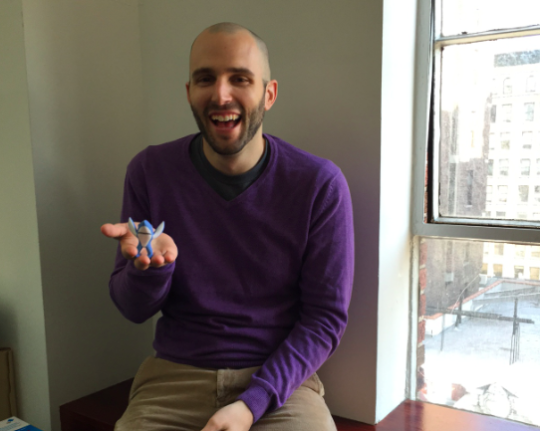
For the past few years, I’ve been working on public interest technology policy at Public Knowledge. While there, I wrote a few whitepapers on 3D printing and intellectual property law: : It Will Be Awesome if They Don’t Screw It Up, What’s The Deal with Copyright and 3D Printing, 3 Steps for Licensing Your 3D Printed Stuff. I also helped to organize 3D/DC, an annual 3D printing policy conference in Washington, DC.
Read More...